• Skip to primary navigation
  • Skip to main content
  • Skip to primary sidebar

Performance training for musicians

Optimize your performance

  • Blog
    • Goal setting
    • Staying calm in stressful times
    • Proportional Focus
    • Training your mindset for optimal performance
    • Bringing your summer holiday into your daily life
  • Coaching
  • Video
  • Newsletter
  • About me
  • Instagram

Blog

Bringing your summer holiday into your daily life

September 2, 2019 by Jens Emil Holm 2 Comments

Bringing your summer holiday into your daily life

During a great holiday with family and friends this summer, I thought about some of the benefits that a holiday can provide us with (apart from just being nice). Things we can use in our professional life to both develop better and to enjoy the process more.
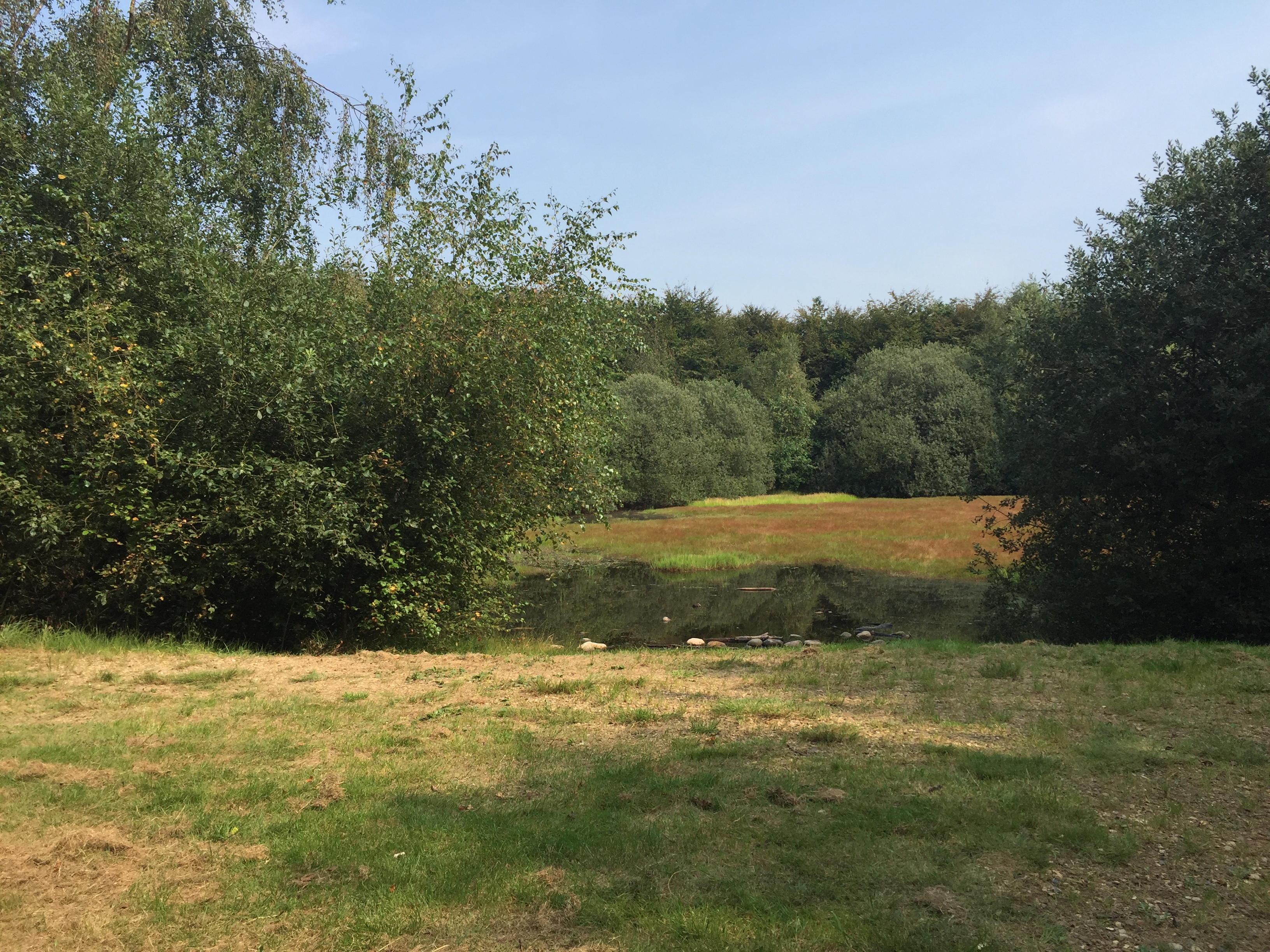
From a peaceful spot in my hometown forest this summer

Figure out what your “things” are

When spending a week in my hometown in Denmark this summer, I was strongly reminded of how important nature is to me. Being outside either in the forest or by the seaside really makes me relaxed and inspired. It gives me motivation and energy to go on with whatever project I’m working on. Usually, it is during a run in the forest that ideas and solutions come up for me.

Now, even though I have always known that nature plays an important role in my life, it is easy to forget it during a busy schedule. Sometimes when I haven’t been out in nature for a while, I might even tell myself that I don’t need it. It is then only when I actually do get out there, that I realize how much I have missed it. I realize how important it is to me.

Holidays away from our daily routines and with less stress are excellent opportunities to reconnect with those things that really matter to us! It might not be nature to everybody, though.

Maybe it is sitting down for a cup of coffee in the city center… or visiting a nice museum…Or playing PlayStation…?

Whatever it is we find important, it is worth making a list of all those things and to write in a few words what they do to us. Such a list is a powerful tool to have when life gets busy and everything tightens up.

Look at your list and make it a priority – even just for 10 min.

When we have our list of things that matter to us, it is, of course, important to read it often and to create space for those things that matter to us.

Very often when we are in a stressed period, we tend to think that we don’t have time to do anything just for “pleasure”. This is very often not true though! We might not have 3 hours to go to the beach. However, we can very often free some time to have a 30-minute walk somewhere nice. Or find the time to read a book for 20 minutes. It demands, though, that we decide to do so…!

Talking from my own experience, it is easy to tell yourself that you don’t have the time to take a book and read for 30 minutes but instead, while being passive and indecisive, you end up spending 25 minutes scrolling on facebook. Now, I’m not here to tell anyone that scrolling on facebook is a bad thing. But if you do spend 25 minutes on facebook because that’s what makes you happy and inspired, then let it be your choice – not just a coincidence!

Use your holiday mode to relax and develop

Try to look at those small sessions – where you do something nice to yourself – as an investment! Also professionally.

Remember that it is during the breaks that the brain develops.

It is the opposite of wasting time. We actually need these small moments in order to learn and develop efficiently.

I remember some years back when I was studying, how I would always play my best during the annual skiing holiday in Norway. Even though I actually practiced less than usual. I would play an hour early in the morning before breakfast and another hour just before dinner in the evening. The hours in between I would spend in nature doing cross country skiing in the most beautiful scenario of the Norwegian mountains. Looking back at it now, it’s quite obvious to me, why I played better and more focused during the 2 hours I actually practiced.

Ever since that experience, I have tried to incorporate that feeling in my daily routines. Yes, I might have to play more than 2 hours.  And no it is not always possible to spend all day outside in such a scenario as the Norwegian mountains. But it is possible to plan small breaks where we allow the mind and body to relax and develop. It is also possible to make sure we are reminded often about what exactly makes us happy and relaxed. And it is possible to actively incorporate those moments in life. If not, we might want to reconsider some things about how we live our life… 😉 

Feel free to make a comment below and tell about what makes your day. We might all be inspired! 🙂

 

Filed Under: Blog

Training your mindset for optimal performance

May 7, 2019 by Jens Emil Holm 1 Comment

As performers, we can’t allow ourselves to rely on having the right mindset by luck. We need to be aware of the different mental states that we have and actively train to switch between them. To some people, this comes completely natural, but for most people, it doesn’t… If you are in the last category, continue reading 😉 

Our state of mind constantly changes – that´s inevitable. It can be due to a lot of things such as blood sugar, hormones, comments from other people and even the weather.

A lot of people go through life, accepting this fact and deal with it as they go along. However, it is possible to take control of our mindset! Through daily training, we can all learn to switch between mindsets. This makes sure that we are in the right state of mind and up to any given task at any time.


Identify your mental states

To be able to actively make a switch between different mindsets, we first need to define what mindsets we have and what they do to us. It can vary from person to person what mindsets occur and dominate, but here follow some general states, that I find most of us have:

Learning mode:

Learning mode is a mindset where we are open and ready to take in inputs. It is an optimal state in lessons and during most of our practice.

In this state, we have a long-term mindset in terms of development and performance. This allows us to try new things and implement them in our playing without worrying about making mistakes.

In the learning mode, we analyze ourselves as we play, asking questions like “How does it sound?”,  “How can I make it better?”, “Did the new method that I used help me, and in what way”? and “What do I do next?” etc.

Performance/attacking-mode:

Performance/attacking mode is a focused and intense state, where we only focus on executing our plan regardless of how we feel or what happens around us. It´s an optimal state for auditions and concerts, where we have to play and perform well under pressure.

In this state, we use the adrenalin to “attack” the challenge by following a strict plan. We are like soldiers in combat. We don’t analyze while playing, but trust our preparation and focus on the execution.

Cozy mode:

It sounds nice, doesn’t it? Cozy mode… It really is a nice state to be in on a Friday night off in front of the TV!! Here we are free of worries and completely relaxed. This state often comes with routines, where the future is well-known and secure (when this episode ends, Netflix will automatically start the next one… that’s nice).

Even though the “cozy-mode” is nice and important to visit from time to time in order to relax, it’s not a state I would recommend to be in right before an audition. Often, though, we get tempted to go into this mode right before something important is coming up. We often use the cozy-mode to try to “escape” the situation we are facing.

Often students are told to take a deep breath and relax before going into an audition or concert. This advice sometimes misguides us into thinking that it’s better to relax and take it easy. Slowly we subconsciously begin searching for the “cozy-mode”. The problem here is, that this state probably is the furthest from the state we actually need in the moment of heat. There we want to be active and ready to fight and perform – even if we are nervous.

Be ready for the situation you are facing

Entering a performance situation directly from the “cozy-mode” can often create some kind of a shock to both the body and mind. It’s like going directly from the sauna out in the snow. If we plan to stay a long time in the snow, however, we need to accept, that it’s going to get cold. By accepting the reality, we can prepare by dressing up in warm clothes.

The same goes for entering an audition. If we accept the fact that it´s going to be hard, and that we are most likely going to be nervous, we can prepare for the situation rather than just hoping for the best.


The relation between different mental states

As described above, there are several mental states (much more than the 3 mentioned already) and each of them can work well depending on the situation. The problem is, that they often work in opposite ways.

In a lesson, for instance, we want to be in an open learning mode, ready to take in new inputs and ideas. This we definitely don’t want in an audition. Here we rather want to follow through and execute the “product” that we have prepared –  we want to be in a performance/attacking mode!

And again, if we turn it around, it can be very difficult to learn anything from a teacher if we stay in our performance mode without being open to new inputs… So in order to both develop and perform, we need both the “learning mode” and the “performance mode”. Just in very different situations. That’s why it can be so beneficial to learn how to actively switch between mental states.


Switching between mental states

You know how certain sounds or smells can bring back memories and make you in a certain mood, right? Well, the same goes for our different mindsets!

Imagine walking into a room where you have played a numerous amount of great concerts. The smell of the room, the stage, the lighting, etc. will most likely bring you back to those good memories. Your body language and general attitude are very likely to follow along and you’ll begin to feel confident and happy while remembering all your success.

The same thing, unfortunately, could happen in a room where you have experienced a great amount of failure. Only now the smell in the room makes you shiver and doubt yourself. I have had a lot of students during the years fighting with this exact problem. In the music academy, students often have to play exams in the same hall every year. If a student has had a bad experience during the first years, it can be quite a challenge not to feel overwhelmed and set back, when entering that exact same stage a year after.

To get out of this problem, we need to actively control and train which mindset and attitude we enter a performance situation with. It can literally mean the difference between failure or success.

Setting yourself up to “performance mode” with a mental routine.

Switching between our mental states is not something we just do by thinking about it. It is something that we need to train over a long period of time, and it is something that needs to be trained and practiced continuously. Just like staying in shape physically. When done correctly, however, it can be extremely powerful!!

Just like the smell of a room or a specific sound can bring us into a certain mood, we want to have a routine that puts us in a mood/mindset for performing and attacking. We don’t want to be dependent on a certain location, smell or sound. We want to be able to control it regardless of where we are or how we feel.

In order to do this, we need a plan and some cues that trigger the right thoughts when we are about to perform. Thoughts that focus on what you CAN do, rather than things you worry about or can’t do. The more detailed plan we have of what actually to do (also mentally), the easier it will be to get in attacking mode. It is much easier to feel on top of a situation when we have something to do, rather than just waiting.

Making your routine

This plan with all the positive cues needs to be boiled down into a mental routine, that can be made in 15 seconds or less. A routine that you can do right before performing (or even during a performance) that will put you in the right mindset. A mindset where you follow through and execute your plan, regardless of how you feel or what circumstances surround you. This routine can be different from person to person. The most important thing is to be consequent! It’s important to really practice an exact routine, that stays the same every time. If staying in the smelly analogy, we don’t want to “change the smell of the room” every time, but instead use the same “good smell” every time we perform 🙂

A routine that I have used with great success myself (and that I also use with my clients) is the “centering exercises” by Don Green. It’s a mental routine in 7 steps that have proven highly effective. You can check it out and see if it works for you, or use it as inspiration to create your own personal routine. Whatever you do, be consistent with your routine.

How to implement this on a practical level?

On a practical level, we need to switch from learning mode to performance mode numerous times during each practice session.

I personally like to divide my practice room in two. One area for practicing and one for performing. This is only to strengthen my own awareness of which mode I want to be in at any time during my practice. A piano player, for instance, could just stand up and take a quick walk, before entering the performing zone.

Study-area

In the learning mode, I will analyze and do all kinds of things to make my playing better. As a trumpet player, this could involve things like singing the phrase or making wind patterns only with air, etc. I will try out new things, to find the most optimal way of playing.

When I have learned the section I’m working on, I’ll determine which “cues” made it work the best. Was it to keep the air (or bow for string players) moving? or to stay active throughout the phrase? or maybe to establish and keep a certain tempo while feeling the downbeats in the body?… The list could go on depending on the music, different people and instruments.

When having established these cues it starts to get interesting…

Performing-area

Instead of just moving on to the next passage or phrase, I’ll turn to the other side of the room and prepare to go into performance/attacking mode. In this mode, I no longer try out things or try to make my playing better. Instead, I mentally reinforce the process cues that I have already found and that I know work. I’ll then use them to execute the specific section, that I have been working on.  The process of performing looks like this:

  • Decide on a specific passage you want to play through.
  • Set your phone or other equipment to record.
  • Set yourself up for performing by doing your rehearsed mental routine (For instance the centering exercises).
  • Pick up your instrument slowly and controlled. Focus on the cues that you know help you play the phrase.
  • Perform the passage. Execute and follow through, no matter what!

After having performed and executed the phrase like this, I’ll go back to my study-area in the learning mode. The first step would be to listen to the recording of my performance. Now I can ask questions like, what could be better? and how can I optimize my performance? 

Now I can easily make a very clear and specific list of things to improve before my next performance.

It’s important to be as specific as possible in terms of what “cues” can trigger you to play better in the next performance round.

Continue the process on both a micro and a macro level

The important thing is the process leading up to performing. This is what we need to train many times a day. We should make our mental routine an integrated part of our performance. In this way, our body and mind will be trained to execute and follow through no matter what. By training the switch into performance mode daily, the body and mind will start to go there as a habit, regardless of the circumstances.

When preparing for an audition or concert, we should begin performing almost from day one. In the beginning, it doesn’t have to be long passages. Maybe only 4-8 bars at a time. It is, however, important to begin “executing” from day one and train your mindset towards this. Otherwise, we often end up in a practice bubble, where we never seem to be ready to play and perform the repertoire in front of other people.

As we begin to really know the repertoire, we can begin making run-throughs of the entire program. The sections that we found to be struggling in, we can then practice and perform separately before running the whole program another time.

The essential thing is, that our mental routine leading up to performing, stays the same, whether we play 4 bars, a full solo piece or even a full recital.

In a full performance, we can with benefit reinforce our performance mode between pieces by repeating our mental routine of 10-15 seconds.


The science behind (very briefly explained)

We know from neuroscience that every time we make an action, information is transferred through electrical and chemical reactions in the brain. The information is transferred through neurons (the nerve cells that transmit information to each other) in different circuits that control different things. The more we use a certain circuit, the stronger it gets.

Very briefly this means that every time we make an action, our brain strengthens the different connections in our neuronal network, controlling that action we are making. Depending on what instrument we play, there will be connections or circuits that will control fingers, arms, legs, lips or whatever is involved while playing our instrument.

Neurons that fire together wire together

Today we know, that when neurons in different circuits “fire together”, the neurons will also wire together, making the connections stronger. On a practical level, this is why an organ player (after a lot of practice) can manage to play with 2 hands and 2 feet at the same time – all while reading a score.

This is where it gets interesting relating to our performance routine…

Since we know that neurons that fire together also will wire together, we have a chance to actually practice habits (our mental routine) that will trigger certain circuits in the brain. This means, that by doing the same mental routine up to and while performing in the practice room, the same circuits will be wired together also for the actual audition or concert.

This doesn’t mean that it is 100% secure we won’t make any mistakes due to nervousness. But it means that we can train our mental state to a point, where our brain and mind are ready to execute and where all the elements to succeed will be started as a chain-reaction in the brain. Not because of magic, but because we have trained this chain reaction consistently over a long period of time.

The neuronal network and how it works is a bigger topic, that we might go in details with later in another post.

In the meantime, if you are interested in knowing more about how to create and use a mental routine that can help you in auditions and concerts, you are always welcome to contact me for an individual session.

Sources

If you want to read more about these topics, here are some of the literature, that I have used to support this post.

Kristian Steenstrup: Blow your mind

Don Greene: Performance Success 

Carsten Reidies Bjarkam w.m.: Fra celle til samfund (in danish)

Daniel Coyle: The talent code 


Filed Under: Blog

Proportional Focus

March 6, 2019 by Jens Emil Holm Leave a Comment


When we cook we are naturally aware of the ratio between ingredients… We know that a little snatch of white wine in the hollandaise sauce is good, but half a liter would ruin it.

The same rule applies, when we practice and prepare for a concert or audition. However, most of us forget or neglect this fact.

We tend to concentrate our energy around the things we find difficult. Some might even have been told to do so. Of course, we do have to spend time around, whatever is causing us problems… But often we spend a ridiculous amount of time on very few bars and neglect everything else in our playing.

A one-note concerto?

For trumpet players, like myself, a good example is the Haydn trumpet concerto. In the middle section, this concerto has a passage that goes to a fairly high note. Say the words “high E-flat” to a trumpet player, and the first thing that will pop into his or her mind is the Haydn Trumpet Concerto!

This means that proportionally trumpet players spend an enormous amount of time practicing this exact bar that leads up to the high E-flat. With so much focus on one specific note, it´s hard not to worry about it also when not playing. Furthermore, if you play the whole concerto with a lot of splits and generally out of tune, but gets the high E-flat, some trumpet players (quite a few, I believe) will categorize it as a successful performance. This obviously is a problem, since to the audience, this note is something like 0,0001 % of the entire concerto. It doesn´t mean more, just because it´s difficult.

Another problem with this way of thinking is that if we only focus on the things we find hard, we don’t anymore build ourselves up while practicing. We easily end up practicing a lot without any remarkable results. We might even get worse.

Don´t let small problems create big impacts!

During my trial year in “Sinfonietta Riga”, we had to play a quite hard and demanding modern piece. I was preparing this piece every day for more than a month. After 2-3 weeks of preparing, I found myself struggling and playing worse and worse.

At this time I hadn’t yet realized that I was focusing all my energy around exactly 4 bars that I found difficult. I didn´t see or acknowledge, that I actually played most of the things in the piece quite well because my inner success criteria were based only on those 4 bars. Spending so much time practicing those 4 bars, made me exhausted both physically and mentally. I actually began doubting myself as a trumpet player and as a musician… Do you think that was helpful??

Luckily, I realized this 2 weeks before the concert and I created for myself a concept that I call “proportional focus”. This helped me to get a better and more balanced focus in the last weeks leading up to the concert which after all turned out to be a good experience.

Setting your proportional focus

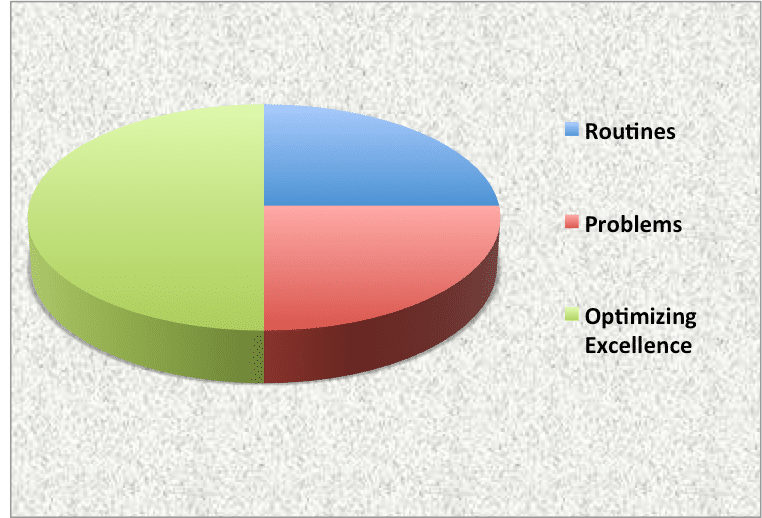
Proportional focus outlines how much time you should spend on:

  • Routines and habits (such as warm-up and basics like scales, arpeggios, lyrical studies etc.)
  • Optimizing excellence (material such as solo pieces, orchestral repertoire, and etudes that you already can play, but where you can work on deeper levels of excellence. This could be working on better sound, phrasing, different articulations, rhythm etc.
  • Addressing my concrete problems (what specific parameters are causing trouble? This could be a group of fast notes, high notes or maybe a long phrase that is hard to play all the way to the end etc.)

Routines

I personally like to spend around 25 % of my time on known routines, where I with slight variations repeat a set of exercises to make my performance stable. You can compare this to watering your garden daily. By routine, however, I don’t mean a set of exercises that you repeat unconsciously but a routine that you have practiced and mastered over a long period of time and therefore can play on your absolute highest level. A level that should set the standard for the rest of your daily practice.

Optimizing excellence

Now, if we only play something that we already played very well and with ease, we won’t develop much further. Therefore we also need to work on optimizing excellence. I like to do this approximately 50 % of my practice time, taking repertoire and etudes that are within my capability but that can be improved in details. Even things that might seem simple at first, can be improved dramatically if we really pay attention to details in this process. This way of perfecting your playing is an excellent way to programme and code the neuronal network in your brain to make you better and more secure in doing whatever you are doing.

Addressing the concrete problem

Finally, I strive to spend 25% of my time addressing my specific problems directly. In this process, it’s unavoidable that we push and strain a little. Even when we try to increase the difficulty slowly, we will at some point have to push a little in order to extend the borders. This is completely okay, as long as we don’t do it too long at a time and as long as we immediately try to establish good habits in the new material.

It can vary how much time each of us needs to spend on our routines, problems etc.  and you will have to find your own proportional focus. You can do it yourself or maybe with some help from a teacher, friend, colleague or coach that can help you see things from an outside perspective.

When you have found your proportional focus, set a timer and follow it. Don´t allow yourself to be tempted to suddenly spend 90 % of your time on one little specific problem. Over time, you will overcome your problem – even with 10 or 20 minutes a day.


Filed Under: Blog

Staying calm in stressful times

February 3, 2019 by Jens Emil Holm Leave a Comment

Finding the right balance between different projects in a busy daily life can be quite an overwhelming challenge. How do we divide and prioritize our time and how do we keep calm enough to still enjoy life while facing all the challenges? 

I have always been a hard worker when it comes to things I care for. I believe hard work is necessary. No doubt about it! But neuroscience tells us that the body and mind also develop during breaks between work sessions. It´s, therefore, crucial to let our minds relax and develop without stress. Easier said than done, I should be the first one to admit.

In fact, I´m writing this post 8:30 in the morning after just having put my 6-month-old daughter to bed after her first “session” of the day. She usually wakes up around 6 and eats. Then she plays and “talks” for around an hour. It is fantastic and inspiring to see, how much she learns and develops in that hour! And with what intensity and presence of the moment she does it. Learning like that takes a lot of energy so after a couple of hours, she usually falls asleep again. Completely calm and ready to rest without worrying about what she has to do next.

Maybe I should just go to sleep and learn from her… Though I also really want to write this post, because later in the day I will need to practice before attending a concert. And we´ll have visitors coming in the afternoon. The challenge of all this is not only about the minutes and hours we have in a day. It´s also about how we recover and to what extent we are able to let go after a work session. My daughter is definitely better at letting go than I am!

In this post, you’ll find some thoughts and ideas on how to handle these challenges.

To-do or not-to-do?

Today we live in a world of “to-dos”. We very often create to-do-lists or “lists of expectations” for all the tasks needed to be done in a day. This helps us stay on top and focused. Now, as effective to-do-lists can be (and I very often use them myself) there is also a danger, that the sum of all the minor tasks and expectations that we list up can create stress… Keeping 2-5 goals/tasks in your head might make you focused and motivated, whereas 50 tasks will make you stressed and more likely to give up before even getting started. This means we need to be smart on how to use and create our “to-do-lists, especially during stressful times!

Replace “tasks” with “areas of improvement”

One very effective thing we can do is to figure out on a more general level, what areas in our life we currently WANT to spend time on. When having figured out 2-3 areas that we want to focus on, we also have to think about which areas we NEED to spend time on. When putting all this together we should have something like 3-5 areas in which we want to invest our time and energy. Again, dividing our mind capacity into 3-5 groups of focus is easier than 50! Each of these areas will, of course, have smaller tasks that need to be done and here it can be beneficial to use to-do-lists as a tool. The most important thing is to regularly step back and think in bigger terms. During stressful times, we tend to overemphasize the importance of every little step and this makes us overwhelmed.

Give the tasks a joined purpose

A simple example: instead of sitting at work, thinking that you later in the day will need to do the dishes, wash clothes, vacuum the floors etc. think that you need to invest an hour or two on your living standards. Set the amount of time aside that you have, and start doing the tasks in a prioritized order. If you have no clean underwear for the next day, this should obviously be taken care of before polishing your silverware… When the time is up, remember to reward yourself. Take a small break, maybe a good cup of coffee or something else that you like. Then you are ready to move on to the next area of improvement.

In this way, we might not finish all tasks every day, but we can manage to work a little on all the areas that we have decided to. This gives calmness and continuity.

It´s the things that we don´t do that make us stressed.

If at the end of the day there are areas that you can´t find time for, you´ll be forced to see it and reconsider which areas in life you currently want and need to focus on…

Find your profile in life – what are you really striving for?

To figure out which areas in life you currently want to be working on, it can be really valuable to write down and establish your own “profile” in life. Does this sound flaky? Well, it’s not actually, it´s the very base of making informed and good decisions and it´s very straight forward as soon as you get started.

Try to imagine yourself and your life portraited in a movie. See yourself as the main character. How do you want that character to appear? Don’t be shy, you are allowed to think big and idealistically! How does your daily life look like? How do you act around people? What are your qualities? In what areas do you want to excel and how do you look when doing that?

Running your ideal day as a movie can give a clear and precise image of what you really are striving for. What you are really seeking and who you really want to be. I don’t want you to use this exercise to necessarily change anything. I want you to search and highlight what really matters to you. Seeing your life from the outside like it was in a movie, gives you the chance to dream without holding yourself back by your inner beliefs of what you can and can’t do. It allows you to look creatively on your own life.

Identify the areas that REALLY matter

After having run the movie in your head for a few times, you should start to see and more importantly FEEL which areas are really important to you. If you are reading this post as a musician, I imagine that practicing and performing well on your instrument is pretty high up on that list. Maybe even higher than you want to admit? Don’t worry, it´s completely normal! Playing music is a very personal thing that has to do with our inner emotions… it’s only natural that it takes a lot of space.

What else do you see in the main character of the movie? Is he or she a good spouse? Well trained? Dedicated? Easy-going? Curious? A good leader? Reflected? Mysterious? Confident? Artistic? Organized?

There are no right and wrong, but there are limits to how many sides, qualities and skills of a character you can nurse and develop at the same time without getting stressed and frustrated. You, therefore, want to pick the ones that matter the most to you right now. You can always change your “profile” later.

I strongly encourage you to write down your current profile in actual words with 4-5 different focuses at a time. Have a monthly rethink of your profile and see how it fits with your situation. I´ll give you an example of a fictive profile of a person. Let’s call our fictive person Sam:

Profile of Sam

Sam is 28 years old and working as a freelance musician. He is a reliable and warm person who more lead by example than by flashy words and acts. Sam is very passionate about playing bass and he works frequently with the local orchestra. He’s eager to develop on his instrument and he, therefore, wakes up every day at 6:00 in order to get a good morning practice done before he goes to play in the orchestra or teaching in a music school. Sam wants to become slightly more confident in both his playing and attitude. To train this side he has started to set up weekly performances, where he plays through audition and solo repertoire. He has also started to work out 3-4 a week because this makes him feel slightly more confident and secure in his own body.

Daily focus: Practicing. Training confidence through performances and mental practice. Working out. 

Accept that focus change and that it’s a good thing

Since we know from neuroscience that the brain keeps developing in the breaks, we can work with this knowledge on both a micro level and a macro level. It allows us to rest in the fact, that we don’t need to do everything all the time in order to develop.

Some things, of course, needs daily attention if we want to excel at it. Especially when there are physical elements like staying in shape on an instrument etc. But it’s not necessarily all parameters of playing that we need to address every day… In fact, some things are left better off if we spend time on it 2-3 times a week and leave it the rest of the days. What those parameters could be is a longer discussion, that we will save for another post. I just want to point out, that we don’t need to do everything every day. It simply gets too hard!

The things that matter the most to us – our number one goal – obviously needs frequent attention. But in other areas, we can easily adjust the intensity of attention or even take a 4-6 month break from it without any problem. We might even get better or see things clearer while being away.

Write your profile and decide which focuses you currently want to have. Accept that other things will have to wait and that it might even be good for them. You can always take them up later. We all have a lot of role models and this is great. However, we can’t be all of them at the same time.

Keep a list of things that make you feel good

Finally keeping a list of simple things that make you calm and relaxed in your daily life is worth a billion! I keep mine in my notebook and I regularly read it and add things to it, as I realize more and more things that make me feel good.

Writing it down and keeping an actual list is crucial! It´s our guidebook in stressful times when our rational mind is being overruled by our emotions. When you are stressed, make sure you make time for something from your list. Even if it´s only for 20 minutes a day, like reading a book or having a walk in the park. The thing is that if you are really stressed, you might not even want to do it before you actually get started. That’s where the list comes in handy. Just pick one of the things and set time aside almost like it was just another task.

We have to plan for the hard days during during good times. When the hard days come, we at least have prepared a path. When hiking in the mountains it´s better to just be hungry than both hungry and lost.

Often when starting doing something that you like, your perspective will change. When getting into it, your thought patterns will change and you might see things clearer. After all, even though we want to work hard towards our goals, we don’t want to stress and lose ourselves on the way. It doesn´t benefit achieving our goals and it certainly doesn´t benefit us as humans!

I hope you could use some of these thoughts, and that they will come in helpful when you find yourself in a stressful time. All the best and stay calm.


Filed Under: Blog

Goal setting

February 12, 2018 by Jens Emil Holm 12 Comments

Goal-setting is an important tool to stay motivated and focused. But it can also make us both frustrated and stressed if we set them wrong. In this post, we will look at how you can set your goals to positively build yourself up while remaining highly ambitious. 

One of the first things you need to do is to define very clear goals for yourself.

I know you have probably heard this a million times! You might also have tried it with little or limited success. Maybe goal setting for you is associated with negativity and frustration… Or maybe you think it´s an overrated tool, that a lot of people talk about, but no one really uses. Here is the thing: Clear and ambitious goals can be one of the strongest tools! It and can lead you on your way to success, but you need to use them smartly.

Connect your goals with your dream

Often you hear people stating something like: “You have to have realistic goals that you can actually achieve“. In opposition to this, you might hear other people saying that you need “to aim for the stars and make clear and ambitious goals to get there”.

I believe the truth is that you need both. You just have to be smart about how to use them simultaneously. If you want to stay motivated and focused at the same time, you need to combine your dream (as unrealistic as it might be) with your practical capability. At the bottom line, we all live for our dreams and not our “realistic goals”.

In order to do this in a way, so that we don´t end up beating ourselves up for not fulfilling our biggest dreams, I came up with the following three categories of a personal goal setting:

  1. The Visionary Goals (dream)
  2. The Practical Goals (path)
  3. The Daily Goals (plan)

The Visionary Goals

Your visionary goals are strongly connected with your inner dreams. They are therefore always positive. These goals work longterm and they don´t have a specific deadline. It should be a vision of where you want to be in 5, 10 or maybe 15 years from now. The visionary goals are very flexible and might change through the years as you develop and change perspective. They are very exact in terms of emotions and feelings but never specific towards practical conditions that you can´t control. In this kind of goal setting, you can use phrases like:

I want to master my instrument, so I can sing on it as if it was my own voice

or

I want to play at a level where I can win an audition for an orchestra, in order to live my dream and play and contribute to a professional orchestra every day. 

In opposition to this, the visionary goals should never contain specific phrases about where exactly you want to work or when you want to win it etc. They shouldn´t be dependent on unknown variables that you can´t control. There is a lot of excellent musicians in the world, but not all musicians can work in the Berlin Philharmonic. However, most excellent musicians can work with some excellent orchestra.

Connect your visionary goals with strong positive emotions

In order to really feel connected to your visionary goals, and in order to use them to keep highly motivated, you should strive to connect them with positive emotions and experiences from your past. Remember and write down those events and experiences that made you discover your passion and dream.

For me, one of the strongest emotions connected to my personal goal (which was to become a professional trumpet player) was when I first time sat down with the local professional symphony orchestra and heard them rehearse Carl Nielsen’s 5th symphony.  To this day this music, in my opinion, is some of the best music ever written. That will always be MY truth –  even if in the big picture there are better compositions out there.


The Practical Goals

As the name itself states, the practical Goal Setting is more specific towards which exact goals you want to reach. This could be a specific technical issue that you want to overcome on your instrument or exact pieces you want to learn and play.

In other words, the practical goal setting is an overall plan designed to bring you closer to your visionary goals.

Connect your practical goals with your vision

The practical goals can be set either by your own ambition or by outside factors that require specific advancements from you, such as concerts, exams or auditions. This means that your practical goals- unlike your visionary goals – often have a very specific deadline for accomplishment. This time-lapse can vary greatly though, from weeks to months and even up to a year or more.

Working with a deadline can be very powerful. However, in order to not lose the motivation and enthusiasm throughout the process, it´s important to hold these goals up against your visionary goals. By doing this, you never forget WHY you practice and work so hard. It ’s important to actively remember all those positive emotions we have connected to our visionary goals while working on a day-to-day basis. It’s crucial because working on our practical goals can be tiring. It might at times take a lot of hard and boring work.

It´s easy to dream and hope for a better and more successful future! But if we don’t use those dreams and strong feelings to work determined and well day-by-day, the dream is very unlikely to be outlived – Jens Emil Holm

Keep your long-term mindset

The curve for learning goes up and down for everybody. What really makes the difference is how we work while the curve is hitting the bottom. If we get overly focused on our practical goals, we tend to give up. We give up if we don’t feel that we are improving in those specific areas our practical goals require. By being aware of this process and reminding ourselves that the brain develops in between sessions, we can remain calm and look at our overall process. If we furthermore use the visionary goals to remind ourselves of the bigger purpose and perspective, we are much more likely to turn “bad days” into something positive and productive.

Different circumstances will cause that you are not always able to fulfill all your practical goals within the deadline or to the level you wanted. This is completely ok!

It’s the sum of all your fulfilled practical goals that, combined over the years, will bring you closer to your vision. Don´t get stuck in the small failures on the way, but learn from those experiences and keep going.

The Daily Goals

The daily goals are meant as a very concrete plan for what you want to accomplish in the near future. This could be within the day or the week. The plan should include which exercises or methods you want to use and study. Furthermore, it should contain practical matters such as times and settings for possible run-throughs of a given program you are working on etc.

You should also make sure your plan contains breaks during the day and week!

It can, of course, vary from person to person how this works the best, but one successful way of doing this is to plan a week ahead with all your major goals. Afterward, you can then adjust the plan from day to day as the week goes. It´s very important to make a plan, that is both ambitious and flexible at the same time.

Finding the right balance

When making these kinds of plans, you need on one hand to take them seriously. You need to do whatever you can to be consistent and dedicated while executing them. On the other hand, you need to allow unforeseen events to make changes to your plan, without getting frustrated and demotivated. This can be a very hard balance at times. Depending on your personality, you need to go over your planning every now and then. Realize, whether you need it to be more ambitious or more flexible.

In my own case, I always tend to be overly optimistic when I make my daily plan. In my younger years, this caused a lot of frustration and stress when I couldn´t follow through. A state you definitely want to avoid, since it´s extremely hard to be creative and focused when you are frustrated. Often it can be helpful to get a second opinion on your daily plan, either from a colleague, spouse or maybe a professional coach. You yourself might not always see which states you end up in during a working process.

Prioritize

By writing down your flexible yet ambitious plan, you have a chance to make good priorities and begin every day with the most important things – all that you didn’t make the day before. In this way you might get everything that you initially wanted to be done in a week, done in 8 days instead. Not a bad compromise, if this secures a focused and healthy work process, where you are calm and concentrated during most of your study time.

People usually overestimate what is possible in a year, and underestimate what is possible in a decade – Tony Robbins

Unlike the visionary goals, there is a limit to what you can accomplish in just one day, and that´s completely okay. Keep your daily goals realistic while realizing that the effect of 365 realistic goals within a year can be overwhelming. Then think about what you can achieve in 10 years after accomplishing around 3650 realistic goals!!

Filed Under: Blog

Primary Sidebar

Recent Posts

  • Bringing your summer holiday into your daily life
  • Training your mindset for optimal performance
  • Proportional Focus
  • Staying calm in stressful times
  • Goal setting

What others say

Jens Emil really helped me with my audition skills. Can’t thank him enough.
He works hard and has a passion for the person he is working with, especially in the area of psychology in playing and performing.
I can highly recommend him if you wanna improve as a musician and get the tools for success.

— Jonas Larsson

Copyright © 2026 · Genesis Sample on Genesis Framework · WordPress · Log in